
In the village of Erudition, nestled among the hills where the spring never failed, Constant had become the most admired man. Through simple farm life, he saw new ways and outlooks to share. He taught that true strength began within. “One cannot give what one has not first stored within,” he would say as villagers gathered under the great olive tree. “A depleted heart cannot sustain others. Honor your inner well before you draw for another.”
People listened eagerly. Constant seemed so steady, so enlightened. He spent long hours in quiet reflection by the spring, journaling his thoughts on smooth stones and sharing insights about protecting one’s peace and listening to the voice of the self. Young and old alike followed. Under the great olive tree, conversations that once turned on the weather or the harvest now sounded different.
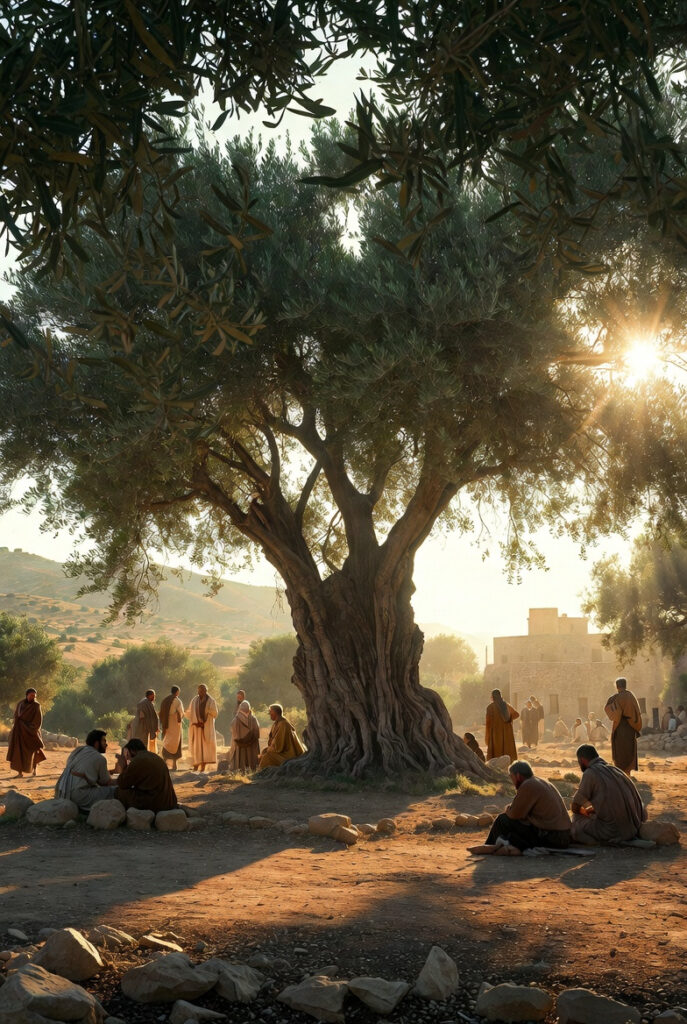
Two neighbors met there one morning. “Peace to you,” said the first. “How is your search?”
“Much progress,” the second replied with a satisfied smile. “I have learned to honor my inner voice above all else. It has brought me such calm.”
The first nodded, but then frowned. “That path is shallow. The deeper work I practice, facing every old wound, will make me truly whole. See how at peace I am?”
Their voices rose, not in rage, but in competition with those certain their own self-awareness was superior. Others under the great olive tree listened and soon joined in, each defending the particular method by which they were learning to love themselves more fully. No one noticed how quickly helping hands had grown still.
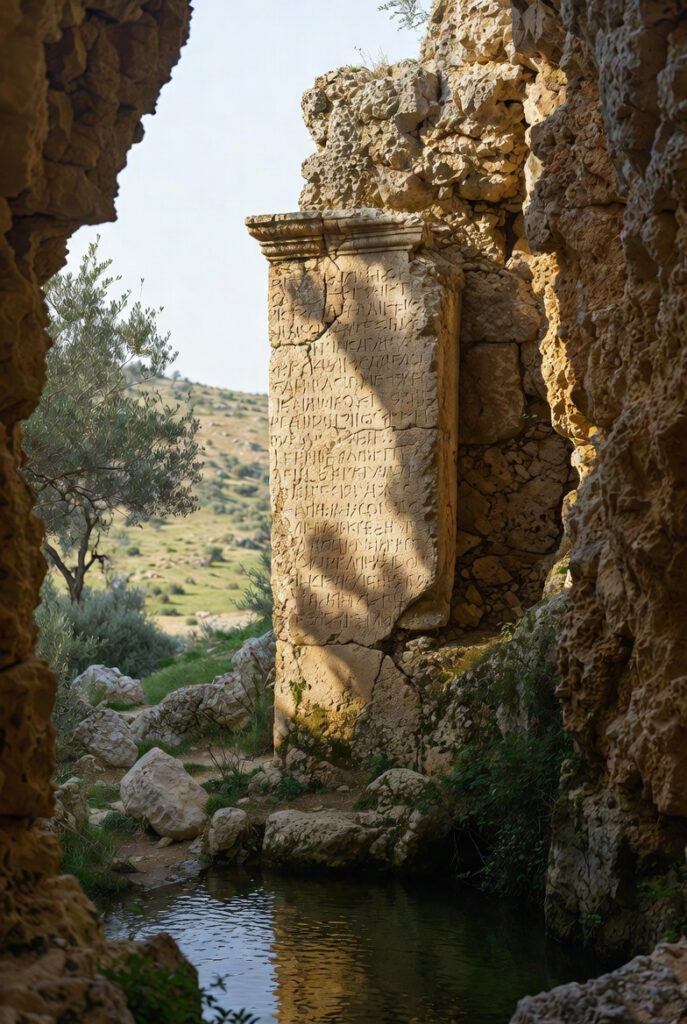
A traveling woman named Binah arrived in those days. She carried little, but her eyes held the quiet discernment that comes from long listening. Villagers called her Binah – Understanding – because she saw clearly what others missed. She would walk to the spring where an ancient stone pillar stood; its surface worn by wind and time. Long ago a prophet from the hills had carved words there, words about the character of the Creator: to do justice, to love mercy, and to walk humbly with God. Dust and moss had covered much of it over the years, but Binah would brush it aside with her hand and speak of what the inscription truly meant.
Constant welcomed her at first, as hospitality demanded. But when she spoke, discomfort stirred.
“Your way sounds wise on the surface,” Binah said gently one evening by the spring, “yet it turns every eye inward. The stone teaches that real life flows not from guarding the self, but from knowing the One who is just and merciful. A heart fixed only on its own well eventually runs dry.”
Constant smiled patiently. “Binah, the old words are good, but the identity must be made whole first. Only then can anything good pour out.”
As weeks passed, the change in Erudition became plain. Generosity faded. When a neighbor’s roof needed mending, the answer came easily: “I must first protect what I have restored in myself.” When the sick needed watching through the night, the reply was the same: “A depleted soul cannot sustain others.” Quarrels under the great olive tree grew more frequent; each person certain their journey toward self-love was the truer path, quick to dismiss anyone whose progress contrasted.
Among them lived an old washerwoman, bent with arthritis and a back twisted from years of labor. She was neither sweet nor likable, yet gruff in speech and sharp when tired. She had quietly washed clothes for the village for as long as anyone remembered, earning enough to feed herself. Lately she washed Constant’s own garments at the spring, her hands trembling as she worked. Her face was gray with exhaustion. She paused, breathing hard, then suddenly clutched her chest. With a small cry, she fell forward into the shallow pool, face down among the linens. The water rippled once and stilled.
Numerous individuals assembled nearby. For a moment, everyone remained still, watching in shock. Then voices rose.
“She refused to tend her own inner well,” Constant said, his tone calm and certain. “Her burdens were not ours to carry if we are ever to become strong enough to truly help one day. This is the cost of our growth.”
A heavy silence fell. Some nodded at first. Others stared at the still form in the water. The old woman had served them all, yet in the end no one shared her burden.
Then one man spoke quietly, almost to himself. “We say we must first learn to love ourselves… yet when we stand together at the spring and the water is calm, what do we see first? Our own face. Our own eyes find ourselves before we notice anyone else. We do not have to be taught this. We already love ourselves more than we admit.”

The words hung in the air like a judgment. Several heads lowered. For the first time, many saw clearly how their “inner well” teaching had only given them permission to do what came naturally – put themselves first.
That night grief turned to anger. The people remembered every time they had turned away from need, every justification they had offered. They remembered Binah’s quiet warnings and the words on the stone pillar. In their sorrow they turned on Constant.
“You led us down this path,” one man said. “Your course has left us empty.”
“You taught us to guard ourselves until we had nothing left to give,” said another. The village expressed its feelings of betrayal scornfully to Constant, rising with stones in hand, yet soon dropped them, knowing judgement was shared to them.
Constant left the village without remorse, still convinced his way was right, his back straight as he walked into the hills.
In the days that followed, a deep remorse settled over Erudition. Conversations changed under the great olive tree. No longer did neighbors compete over whose inner journey was superior. Instead, they asked simpler questions: “How can I lighten your burden today?” A stranger passing through with a broken cart found charitable hands ready to help. Nurses cared for the sick child throughout the night, unlike before.
Binah remained a while longer. She did not boast or condemn. She simply walked with them to the spring and brushed the dust from the old stone once more. There they read again the ancient words about justice and mercy and walking humbly with their God. They began, slowly, imperfectly, to live them. Acts of sacrifice appeared, small but real, and the spring seemed to flow clearer, or perhaps their eyes simply saw it differently.
Years later, when travelers asked what had changed in Erudition, the elders would speak with quiet honesty. They stated, “We almost annihilated ourselves, not because of a shortage of effort, but a deficit of genuine understanding.” We thought the self was the highest good. We forgot the character of the One who made us merciful, just, and worthy of humble trust. When we turned our eyes outward, depending on Him, life returned.
The village never saw Constant again. Some wondered if he ever found the peace he sought in his inner well. The people of Erudition no longer wondered. They had learned, through costly loss, that a heart turned only inward eventually leaves everyone thirsty.
Pingback: The Harvest | Doctrine Challenge